
At Geneva Watch Days 2024 you unveiled 22 references in one shot why go “all in” on day one instead of staging the rollout to test-market signals first? Do you believe this was right decision?
When
we launched Favre Leuba one year ago, it was important for us to showcase a
clear roadmap with the direction we are taking. It is our intention to position
Favre Leuba in a commercial position; i.e. Favre Leuba is not a niche, boutique
or micro brand. Since the launch of last year, we have added at least another
12 references and will launch yet another 7 references during GWD beginning of
September.
With movements today coming from La Joux Perret (and tourbillons from Chronode), which parts of the calibre stackarchitecture, regulating organs, complications do you most urgently want to internalise, and why?
The
one movement, caliber, module that is an important part of Favre Leuba’s DNA is
the Bivouac. The Bivouac, which was launched in 1962, was the first wristwatch
measuring and indicating the altitude. Early on it was clear to me that this is
one of the first in-house conceived instruments to be launched. The project for
the re-edition of the Bivouac was kicked-off over one year ago and we plan to
launch the Bivouac Revival model in 2026.
Silvercity/KDDL bought Favre Leuba for
about SFr1.49 million. How does acquiring such a storied name at that price
shape your capital-allocation philosophy between product, heritage curation,
and brand media?
We
have a long term plan with Favre Leuba, this means brand building on all
levels. The product philosophy is clear when looking at the collection of today
and what was launched at GWD 2024. It goes without saying that our focus is the
product and the value proposition. The fact that we launched 22 watches with
four different movements is proof that our investment and focus on the first
year was the product development.
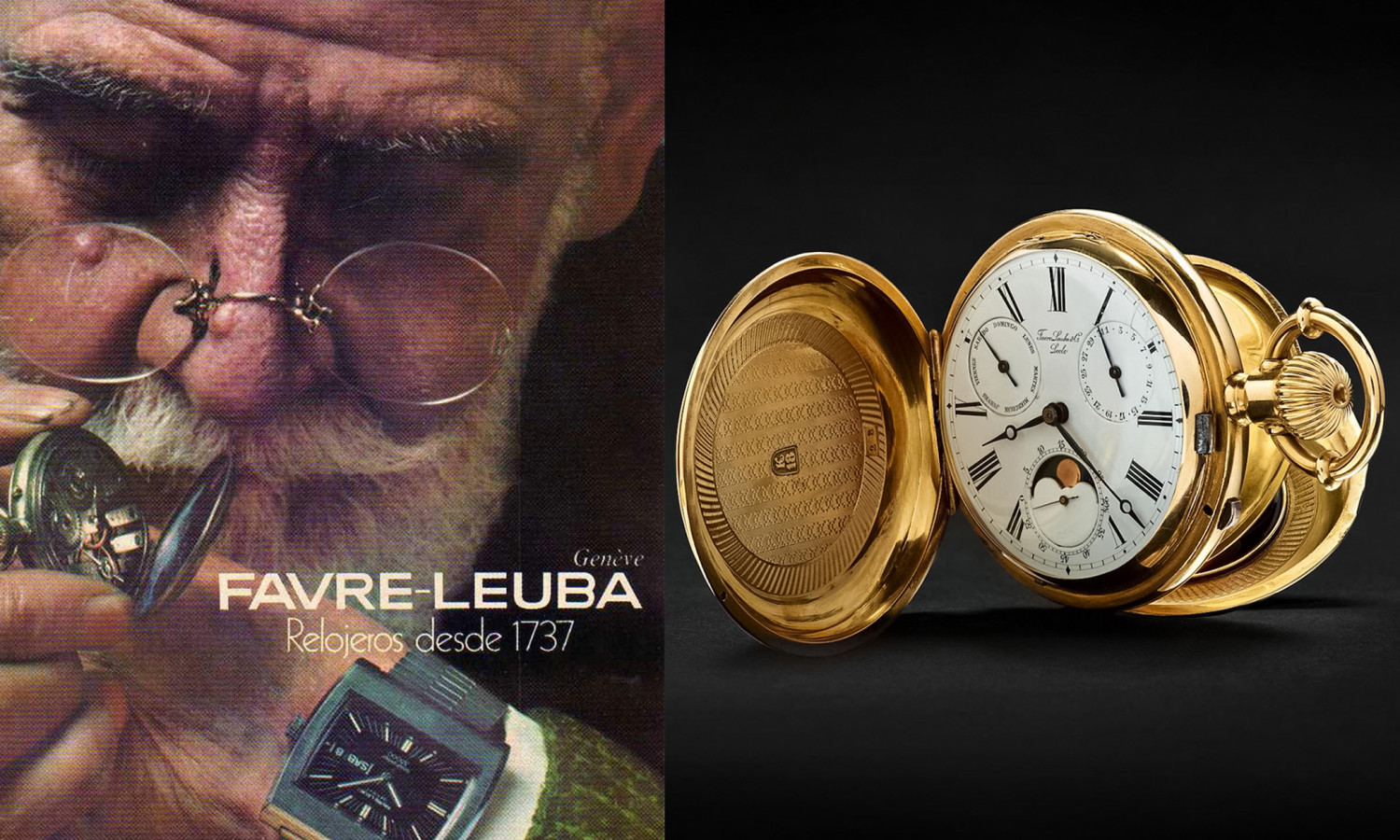
Favre Leuba dates to 1737 and is often cited as Switzerland’s second oldest watch brand how do you monetize that heritage without turning the company into a museum?
The
heritage of Favre Leuba is key. Our product development, our communication and
our key message is based on our heritage and history. We are proud to continue
this history and therefore put a lot of emphasis on communicating the history
of Favre Leuba. I would like to mention that Favre Leuba never went dormant
from 1737 until we acquired the brand. Naturally, the quartz crisis was a big
hit for Favre Leuba, like for the Swiss watch industry in general. Our aim is
to continue the history of and legacy of Favre Leuba where it ended during the
quartz crisis.
You hinted a new Bivouac is coming in the next 12-18 monthswhat are the toughest modern engineering constraints of delivering a mechanical altimeter/barometer that’s genuinely daily wearable in 2025?
I
mentioned our Bivouac plans above. To put the answer into one word, I would
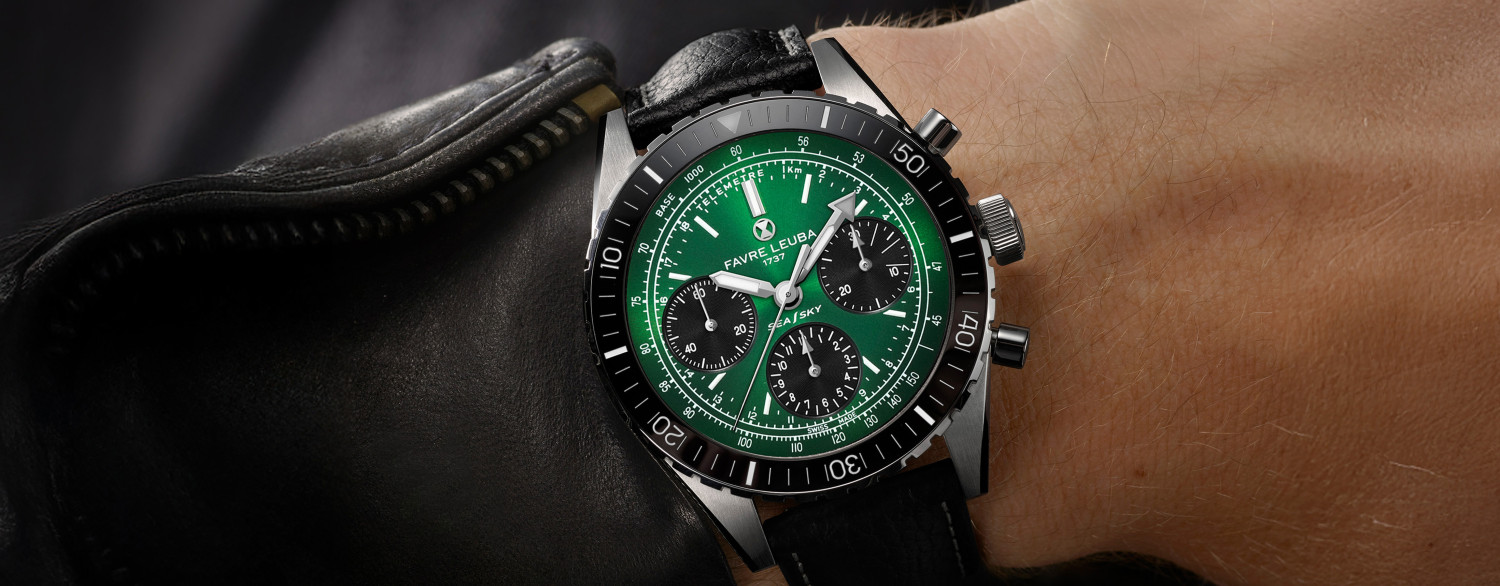
say: “Size”. The new Bivouac, that will hopefully be launched in 2026, will be
wearable and very much true to the heritage of the first Bivouac of 1962. Just
like the Deep Raider and the Sea Sky that we launched last year.
The brand was the first Swiss watchmaker to enter India (1865). With Ethos as a powerful partner, how do you prevent Favre Leuba from being perceived as “India centric” while still exploiting that massive advantage?
Again
the key is the product. Our product development follows a global approach. I
personally believe that a product, like a wrist watch, needs to be developed
for a global audience to be successful and sustainable. Or to put it in a
different way, I do not believe that the tastes of the consumers various
distinctively across the globe. There are certainly some slight nuances but the
success of a brand must be measured globally with a globally accepted and
desired product range.
Your vintage ecosystem relies on historically important calibres like the FL251. What’s the concrete plan (parts, documentation, certified independents) to future proof after sales for those collectors?
Our
plan is transparency. When we re-launched the brand in almost one year ago, we
officially declared that we have partnered with La Joux-Perret with all the
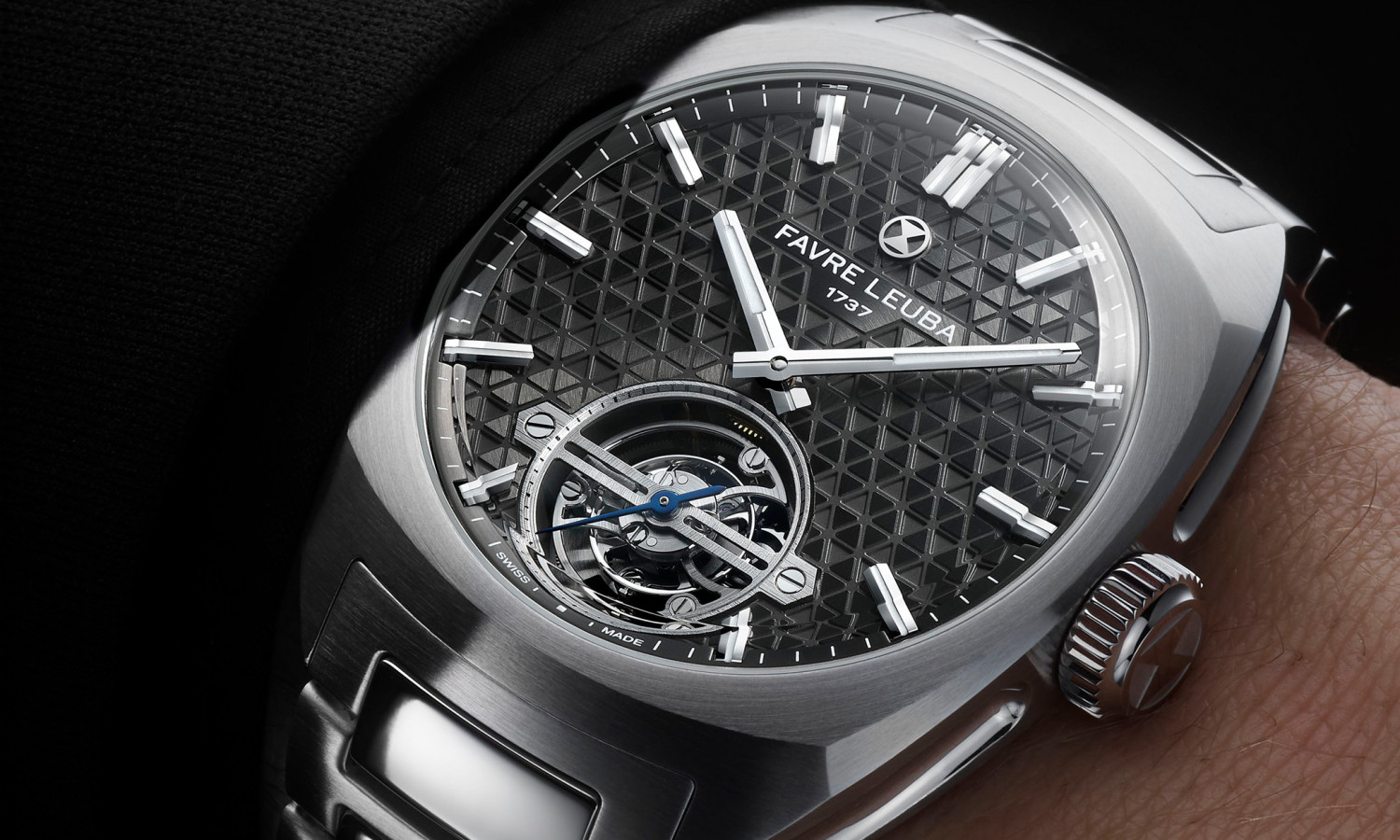
movements we launched at that time. The first Tourbillon ever produced in the
288 years history or Favre Leuba was a collaboration with Mr. Jean-Francois
Mojon from Chronode. Such collaborations will continue to be part of our path
of building the brand and we shall continue to declare and communicate about
such.
We
are only at the very beginning of a new era of Favre Leuba and it will take
some time for us to eventually develop our own calibre besides the Bivouac
which I mentioned above.
You steered Ulysse Nardin through the Kering era what governance or brand-building lessons from that period don’t apply to an entrepreneurial resurrection like Favre Leuba?
I
need to correct here: I steered Ulysse Nardin way before we integrated into the
Kering group. My career with Ulysse Nardin started in 1996 when I met Rolf
Schnyder in Asia and was part of a distribution group. In 1999 I joined Ulysse
Nardin I was part of the entrepreneurial resurrection of Ulysse Nardin with a
number of staff of below 30 and way over 300 when I was the driving force in
selling Ulysse Nardin to the Kering Group. Therefore I can tell you that all
entrepreneurial moves, intuitions, flexibility, and spirit that lived within
Ulysse Nardin during my enter tenure at Ulysse Nardin can and should apply to
Favre Leuba as well.
Chief, Deep Blue, and Sea Sky each carry historic DNA what’s the internal rubric for keeping those lines visually distinct without diluting a unified Favre Leuba signature?
When
we “had to” decide which three lines we should resurrect first, it was not an
easy choice as the there are many core visual languages to be found in the
historical timepieces of Favre Leuba. There is more to come with at least 2
more families to be added to the Favre Leuba collection next year.
Would you consider open sourcing parts of
the archive technical drawings, catalogues to crowdsource scholarship and build
community authority around the brand’s history?
This
is difficult but important task and we have engaged a historian helping us with
this. Unfortunately, the ownership of Favre Leuba has changed several times
after the quartz crisis and many documentations are missing; i.e. technical
drawings.
Given your deep planned presence in India, how do you localize service, spare parts, and watchmaking education there without compromising the “Swiss made” narrative?
All
our watches are produced in Switzerland and India, especially Ethos, is well
advanced with well equipped service centres and trained staff. Besides the
Tourbillon which was just launched, the base calibers which we are using from
La Joux-Perret are well-known movements. There will be no compromise in quality
and service, just like many other reputable brands are operating in India since
years.
What’s the single KPI that will tell you the revival is truly working: gross margin stability, waitlists on niche complications, or resale price ratios on the first relaunch references?
Value
Proposition.
As you outsource assembly today, what are the specific quality gates (tolerances, testing regimes, supplier scorecards) you’ve instituted to make sure scale doesn’t erode credibility?
Again,
we are only at the beginning of this new era in the history or Favre Leuba.
Although we already have a production plan for this year of around 8000
watches, this is not yet where we will be in 10 years ago; i.e. quality, best
sourcing, constant improvements, use of new technologies and materials,
training, training of after sales service centres worldwide and a
clever/sophisticated monitoring system are key. For my this has first priority
as the quality has to be right. For me the technicians, engineers and
watchmakers are the hero (intern and external). I will continue, like I did in
my previous tenures, to support, drive and encourage them to keep them
motivated, creative and loyal.
All our watches are produced in Switzerland and India, especially Ethos, is well advanced with well equipped service centres and trained staff. Besides the Tourbillon which was just launched, the base calibers which we are using from La Joux-Perret are well-known movements.