WE ARE CURRENTLY DEVELOPING A PERPETUAL CALENDAR FOR PUBLIC RELEASE
As
a Swiss native, you initially pursued industrial design and cinema before
returning to watchmaking. Can you share the story behind this journey?
In
reality, I studied industrial design, not cinema, and I never truly “returned”
to watchmaking, I’ve been immersed in it since the age of 15. My grandfather
always wore the same Rolex, which he never took off… except when I was with
him. He would take it off and hand it to me so I could draw it. That’s where my
passion was born.
I
then completed internships at Chopard, Hublot, and other maisons, which allowed
me to discover this world early on. After graduating in industrial design, I
worked for four years with independent watchmaker Dominique Renaud. Later, I
moved to Asia to work for major watchmaking groups.
The
idea behind Furlan Marri came from a desire to combine fine watchmaking
know-how with larger-scale production done to high standards. That’s when Hamad
and I imagined our Kickstarter campaign and began designing our first watch.
What
was the defining moment or trigger that inspired you to launch your own watch
brand?
It
was above all the desire to chart my own path in watchmaking. My experience in
Asia confirmed that it was possible to create something well- made and
innovative in the accessible segment. Hamad and I wanted to bring that vision
to life together.
You’ve
had the privilege of working alongside legends like Dominique Renaud and Jorg
Hysek. What are some of the most valuable lessons you learned from them—both
technically and creatively?
Working
with Dominique Renaud was a unique experience: we were a very small team of
just four people. I was able to learn directly from him every day, tackling
highly technical questions of horological research and innovation. My work went
far beyond design: I also created bridges, screws, and components, as well as
packaging and exhibition spaces. For example, I designed the entire scenography
for a world premiere event, from the display cases to the exterior lighting.
This
taught me to think with both technical precision and creative depth, ensuring
that everything was considered inside and outside the watch.
With
Jorg Hysek, I refined my hand-drawing skills. He had an exceptional stroke and
taught me traditional techniques, using gouache and paint, similar to what I
had done previously at Chopard.
In
your view, what defines a well-crafted watch today? And where do you find
inspiration when designing a new piece?
For
us, every project must have a genuine story to tell. We don’t create a watch
simply because we like it or to add a new color, there has to be a strong
meaning behind it.
That
story lives in the product itself, but also in its packaging, the experience we
offer, and the way we present it. A watch rich in details and meaning naturally
sparks longer conversations, allowing the collector to make the story their own
and share it with others.
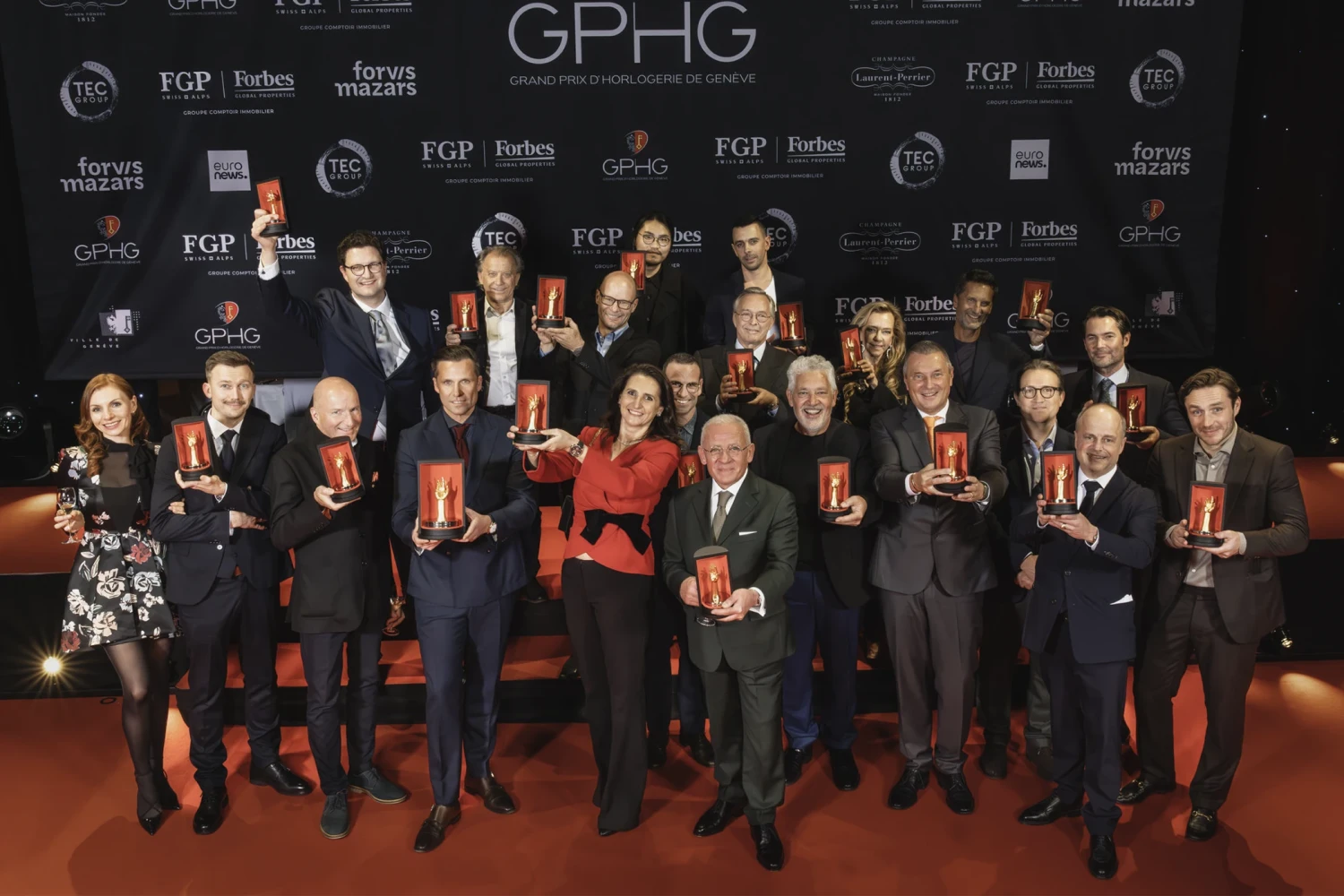
Winning
the GPHG Horological Revelation Prize in your very first year was an
extraordinary achievement. What’s the story behind that watch, and how did it
feel to receive such a prestigious recognition so early on?
We
were very surprised; it was only six months after our Kickstarter launch. This
award was incredible, but it also put pressure on us: we had to prove that we
truly deserved the title of Horological Revelation. Within a year, we launched
a secular perpetual calendar developed with Dominique Renaud and Julien Tixier,
complete with a patent. It is one of the simplest in the world, which is rare
at this level of complication. This showed that we were not only here to create
accessible watches, but also to innovate.
Do
you feel a sense of pressure to maintain that momentum or does it motivate you
creatively?
Yes,
there is inevitably some pressure, but it also drives us to structure the
brand. We need to take the time to think about our collections so that they
make sense together both in terms of
design and price positioning. We already have projects mapped out for the next
five years, which allows us to move forward with a clear vision.
Many
people know Furlan Marri for its vintage-inspired designs. Can we expect
something radically modern or regionally influenced in the future?
We
often blend vintage spirit with contemporary touches: for example, the Disco
Volante features luminova for a more modern look. The perpetual calendar
revisits an old complication but in a way that was impossible to achieve in the
past.
We
have also created regionally influenced editions, such as dials with Eastern
Arabic numerals or colors evoking the Saudi desert and the Middle East. In the
future, we’ll continue in this direction, while also exploring more modern
materials like sapphire or titanium.
You’ve
hinted in many forums at more mechanical complications ahead. Can we expect a
Furlan Marri perpetual calendar or automatic series soon?
Absolutely.
We are currently developing a perpetual calendar for public release, and we
also plan to offer the secular perpetual calendar. We’ve designed a module that
can be adapted to an automatic movement, to make these complications accessible
to a wider audience. The goal is to create a technical collection with
innovative complications.
What
advice would you offer to aspiring designers and young watchmakers who admire
your journey and hope to follow a similar path?
If
you want to create your own story, design, or brand, you need to talk about it
early: to collectors, journalists, and those around you. Gather as much
feedback as possible.
Don’t be discouraged by
people who tell you it’s impossible, many told me that, and yet we made it
happen. Don’t listen to those who haven’t tried what you want to accomplish.
Follow your vision, and start communicating months before launch: that’s how you
can gauge interest and refine your project.


-(1100-x-350-px).jpg)
.png)

.jpg)