
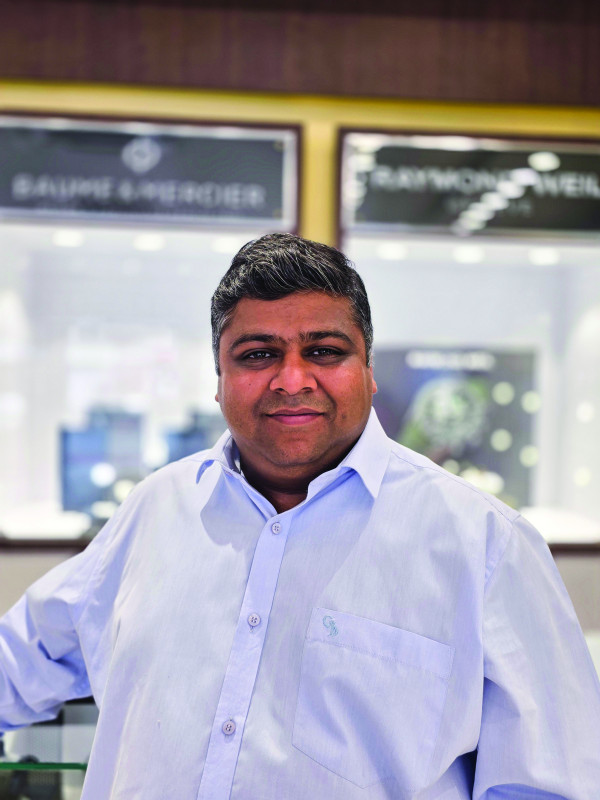
In recent years, Nepal’s watch market has been gradually evolving under the influence of digital media and shifting consumer preferences. To understand the challenges, opportunities, and consumer behavior in the country, we sat down with Mr. Pankaj Jhunjhunwala, CEO at Watch Gallery, Nepal, a passionate watch collector, enthusiast, and retailer in Nepal.
How
do you see the current watch market scenario in Nepal?
The
watch market here is definitely evolving. With the influence of social media
and digital platforms, customers are now more aware than ever. They do a fair
amount of research on brands, prices, and products before making a purchase.
However, the challenge is that Nepal still has a limited presence of major international brands, and overall watch education is quite low. Since Nepal is considered a smaller market, many global brands tend to overlook us, which leaves customers with fewer choices.
In
your view, how has customer behavior changed in recent years?
Earlier,
people bought watches without much research mostly traditional brands like
Seiko or Citizen. Today, customers are far more cautious and skeptical. They
want to know not only which brand they are buying but also whether that brand
will truly satisfy their personal needs.
We also see the rise of micro-brands globally, which are more customer-focused and offer unique designs. Consumers now have more access to customized options rather than sticking to just traditional, mainstream watches.
What
are the key factors that Nepali customers look for when buying a watch?
First
and foremost, it’s not just about the brand name anymoreit’s about what the
watch offers. Customers consider movement type (automatic, quartz, or smart),
design details like case size, strap material, and additional features such as
chronographs, day-date displays, or moon phases.
Size is a big factor as well. For Nepali consumers, 38mm–40mm cases are most comfortable. Watches larger than 41mm tend to look bulky, and while some younger buyers still like oversized pieces, most customers are leaning toward comfort and wearability.
How
important is after-sales service in the Nepali market?
Very
important. Every watch comes with maintenance costs, no matter the brand. With
higher-end brands, servicing is usually more expensive, so customers need to be
prepared for that.
Unfortunately,
Nepal doesn’t really have a proper secondary market or strong after-sales
infrastructure. Most people depend on local watch repair shops, which may not
always provide the quality servicing a fine watch deserves. This is a major gap
in the market.
What
role do retailers like you play in guiding consumers?
A
good retailer is not just about selling a brand but about educating the
customer. When someone comes in, it’s our responsibility to explain the
differences between movements, features, and brands, and help them find what
truly fits their budget and lifestyle.
The internet can give you technical details, but it cannot replace the expertise and experience of a knowledgeable retailer. That’s why physical stores are still important—they give customers trust, clear advice, and personal help that online shopping cannot.
From
your perspective as a collector, what excites you about watches today?
Personally, I see watches as more than accessories they are stories on the wrist. I love how micro-brands are pushing creativity and how established brands keep refining their heritage. The balance of quality, comfort, and personal expression is what excites me most.
Finally,
what advice would you give to Nepali customers who are looking to invest in a
watch?
Research
well before you buy. Don’t just go after the brand name understand the
movement, the features, and the after-sales support. Talk to retailers who can
educate you, and if they can’t, then don’t buy from them.
A good watch is a long-term investment, not a short-term fashion piece. Choose something that fits your lifestyle, budget, and wrist comfortably. Above all, buy the watch that speaks to you, not just the one that others want you to wear.
This insightful conversation highlights the evolving yet challenging nature of Nepal’s watch market. With consumers becoming more informed and choices slowly expanding, the role of retailers and collectors remains crucial in guiding buyers toward meaningful, long-lasting purchases.